Parasite: How the Film Tells You Everything With Stairs and Windows
Bong Joon-ho has described this film as a story about a staircase. This guide follows the visual system that idea produced, using the director’s own account of his intentions.
Introduction
Some films hide their clues in the corners of the frame. Parasite puts its clues in the architecture, which means the information is unmissable and yet almost nobody registers it consciously on a first viewing.
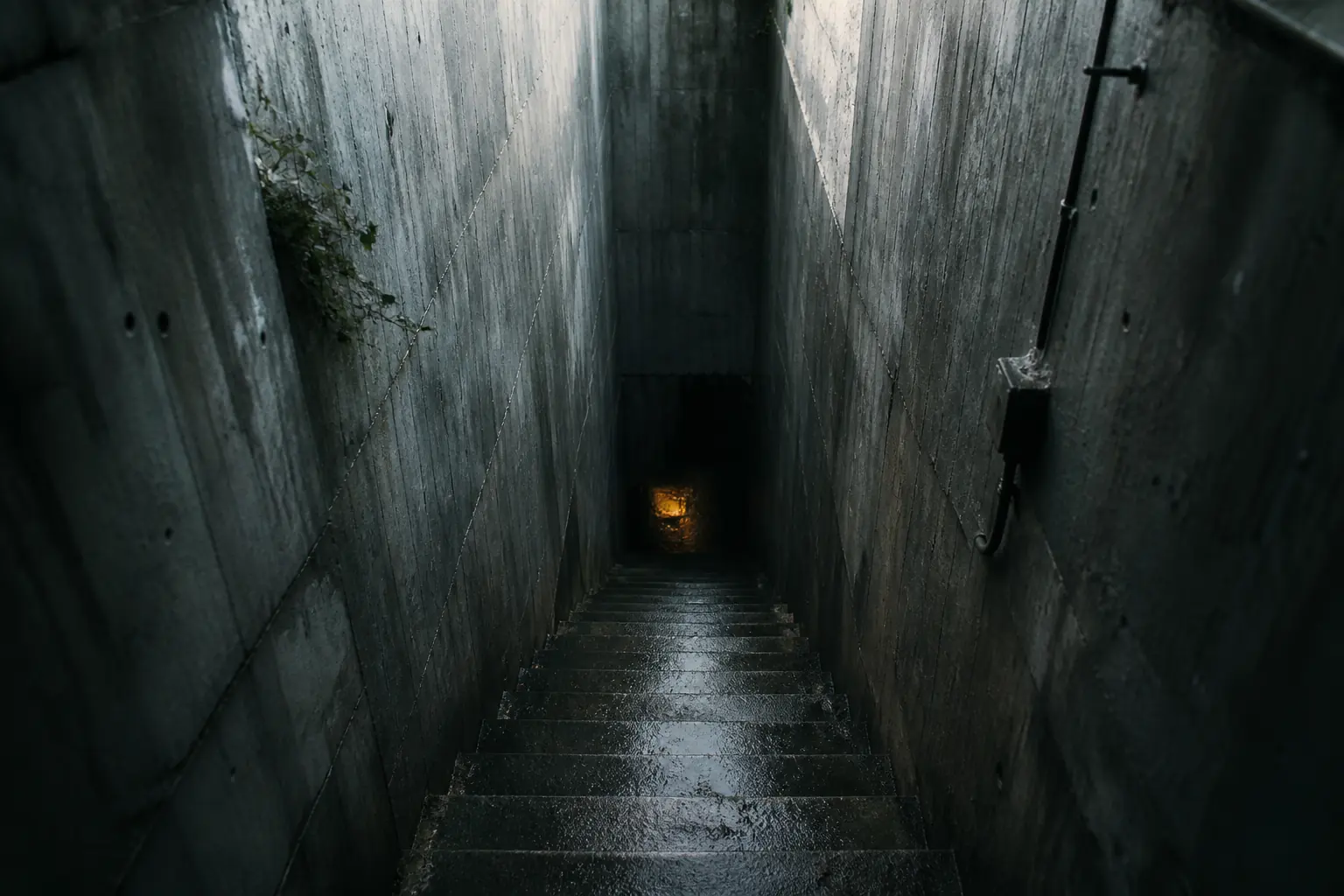
The system is vertical. Characters are positioned above or below one another almost constantly, and the film tracks their movement between levels with an attentiveness usually reserved for plot. When someone climbs, it means something; when someone descends, it means something else.
Bong Joon-ho has discussed this design at length, which puts most of this guide in the confirmed column. Where the readings go further than his statements, particularly regarding specific objects, the guide marks the line.
Spoiler warning
This guide discusses the ending and major plot turns in detail. It discusses the discovery beneath the house, the events of the final act, and the closing sequence. The detail-by-detail section below stays hidden until you choose to open it.
Film context
The film was released in South Korea in May 2019 and internationally through the following months, winning the Palme d’Or at Cannes and subsequently the Academy Award for Best Picture, the first film not in English to do so. That reception matters for a details guide because it produced an enormous volume of interviews in which the director explained his own choices.
Bong wrote the screenplay with Han Jin-won, and the project developed out of his long-standing interest in class stratification, a subject he had approached from other angles in Snowpiercer and The Host. The vertical arrangement here is the most literal version of an idea he had been working on for years.
The wealthy family’s house, which appears to be the work of a celebrated architect within the story, was designed and built as a set by production designer Lee Ha-jun. It does not exist as a building. Its garden, sightlines, corridor lengths, and the position of every stair were designed to make specific compositions possible.
The semi-basement apartment was also constructed, on an outdoor set with a water tank built beneath the street level so the flooding sequence could be staged practically. Both spaces were engineered around the film’s vertical logic rather than found and adapted.
The details, one by one
Each entry below carries an approximate on-screen time and a label marking whether the detail has been confirmed by the people who made the film or remains an informed reading. Running times vary between theatrical cuts, home releases, and restorations, so treat every timestamp as a signpost rather than a precise measurement.
It discusses the discovery beneath the house, the events of the final act, and the closing sequence. Open this section when you are ready to read the details in full.
Times refer to the theatrical version, which runs about 132 minutes.
The first window tells you the family’s exact social position
The film opens on a window at street level, looking up at a road from inside a partially submerged apartment. The dwelling type is specific to South Korean cities, a semi-basement unit that is neither underground nor above it, and the window is the visual definition of that in-between status.
Bong has discussed the semi-basement as a precise social marker: a household in one has not fallen all the way, and that partial elevation is what makes the family’s aspiration plausible. The window frames both the sky and the gutter.
The set was built to make that view possible, with the camera able to look up through the window to the street and back down into the room. Everything the film will later do with height is established in this one composition.
On the record: Bong Joon-ho has explained the semi-basement’s social meaning in numerous interviews, including with Vulture, the Los Angeles Times, and in his Cannes press conference.
The whole film is a staircase
Bong has referred to the film as a stairway story, and the design follows through with unusual rigor. Every significant transition between the two households involves climbing or descending, and the film measures distance in steps rather than in city blocks.
Watch the sequence in which the family returns home during the storm and the logic becomes explicit: the descent is continuous, through streets, down stairways, through a tunnel, into water. The film has spent an hour teaching you to read altitude, and it collects on that lesson in a single unbroken movement downward.
The house set was built to support this. Its interior levels, the garden above, and the passage below are arranged so that vertical relationships remain legible in nearly every shot.
On the record: Bong has described the film as a stairway movie in interviews and in his Cannes remarks; the set design supporting it is documented in interviews with production designer Lee Ha-jun.
The decorative stone arrives in the first act and never leaves
A friend brings the family a suseok, a collectible viewing stone of the kind traditionally displayed by Korean scholars as an object of contemplation and, in some accounts, a bringer of fortune. It is presented as a gift for a household that has no money and no room for it.
The object recurs at almost every turn in the plot, and it is one of the few props the camera returns to deliberately. Bong has discussed the stone as an object of aspiration that becomes a burden, and its final placement is one of the film’s clearest statements.
The specific readings applied to the stone go well beyond what Bong has said. What is confirmed is that it was chosen as a culturally loaded object and used as a recurring marker; the more detailed symbolic schemes belong to interpretation.
On the record: Bong has discussed the stone’s role in interviews, including with IndieWire and in the film’s official press materials; the suseok tradition is documented by Korean cultural institutions.
Smell is the one boundary money cannot redraw
The film introduces smell as a motif in a child’s offhand remark and returns to it repeatedly, until it becomes the trigger for the final act. It is the only class marker in the film that cannot be bought, borrowed, or forged.
Bong has explained the choice directly, describing smell as the detail that exposes the family precisely because it is involuntary. Clothing, speech, and credentials can all be counterfeited. The smell of a semi-basement cannot.
The staging supports the idea physically. Characters lean away, cover their faces, or move to the far side of a car seat, and the camera notices each time without comment.
On the record: Bong has discussed the smell motif and its class function in multiple interviews, including with The Guardian and Vulture.
The improvised jingle borrows a familiar Korean tune
To memorize a false identity, a character sings a short jingle built on a melody Korean audiences recognize instantly, adapted from a well-known song. For most viewers outside Korea, the moment reads as a nonsense chant.
This is one of the clearest examples in modern cinema of a detail that is fully legible to a domestic audience and almost invisible internationally. Bong has confirmed the source of the tune, which turned the phrase into a widespread joke in Korea after release.
It is worth including because it demonstrates that hidden details are not always hidden by design. Sometimes they are simply local, and the border does the concealing.
On the record: Bong and the cast have confirmed the melody’s source in Korean-language interviews and in subsequent English-language coverage of the film’s reception.
The word for a boundary is used as a warning
The wealthy husband repeatedly refers to a line that employees must not cross, using the term in a manner that sounds like ordinary professional distance. The film then constructs its entire final act out of the crossing of that line.
The dialogue is doing what the architecture does. A verbal boundary is established, tested, and finally broken, in parallel with a physical boundary that is climbed, descended, and eventually broken as well.
Bong has spoken about the line as the film’s organizing idea. It is not a hidden detail so much as an announced one that audiences tend to hear as small talk.
On the record: The dialogue appears in the film, and Bong has discussed the boundary motif as central to the screenplay in interviews around the film’s release.
The imported cowboy-and-Indian play
The wealthy family’s young son plays at being an Indian, complete with a purchased costume and tent, and the father later dons a headdress for a party. Critics have read this as a pointed comment on the importation of American cultural symbols into Korean affluence.
Bong has spoken generally about the influence of American consumer culture on the family’s taste, including the imported tent and the boy’s obsession. Whether the motif was constructed as a specific critique of that particular imagery is less firmly documented.
The reading is strong and the pattern is real. We keep it in the interpretation column because the director’s statements stop short of confirming the specific argument.
On the record: Bong has discussed the family’s consumption of American products in interviews; we found no statement confirming the specific critique that critics have proposed for the imagery.
Connections to other films
Bong’s own filmography provides the essential context. Snowpiercer arranges class along a horizontal train, and Parasite rotates the same idea ninety degrees. Watching them together makes the geometry of both films legible as a single ongoing argument.
The film also belongs to a longer tradition of stories about servants who infiltrate a household, running from Joseph Losey’s The Servant to Claude Chabrol’s La Cérémonie. Bong has cited the latter, and the comparison clarifies how much of the film’s tension comes from domestic proximity rather than from plot.
Within Korean cinema, the film sits in a period of intense international attention that had begun two decades earlier, and its treatment of genre mixing, moving between comedy, heist, and horror inside a single picture, is characteristic of that industry rather than unusual within it.
Cultural references explained
The semi-basement dwelling is a specific product of South Korean building history. Many were constructed as civil-defense shelters and later converted to rental housing, which is why they are common in Seoul and almost unknown elsewhere. A Korean audience reads the family’s address instantly; an international audience learns it from the images.
The suseok stone belongs to a scholarly tradition shared across East Asia, in which a naturally formed rock is displayed and contemplated as a miniature landscape. Presenting one to a family with no space for contemplation is a joke about aspiration that lands differently depending on how familiar the object is.
The film’s treatment of private tutoring, entrance examinations, and forged credentials reflects a real and heavily documented feature of Korean educational competition. The plot device that starts everything, a falsified university certificate, is not an exotic invention but a recognizable local anxiety.
Confirmed facts and interpretation
Because the film received extraordinary international attention, Bong gave hundreds of interviews in which he explained his design decisions. That makes this one of the most reliably documented films in this library.
The interpretive pressure here comes from abundance rather than absence. With so much confirmed intention available, readers have tended to assume that every visible object carries an equally deliberate meaning, which the record does not support.
On the record
- The semi-basement apartment and the wealthy family’s house were both purpose-built sets, designed around vertical sightlines.
- Bong has described the film as a stairway story built on ascent and descent.
- The recurring stone is a suseok, a traditional Korean viewing stone, chosen as a loaded cultural object.
- Smell was chosen deliberately as the one class marker that cannot be disguised.
- The memorization jingle adapts a melody widely recognized in Korea.
- The flooding sequence was staged practically, with a water tank built into the outdoor set.
Interpretation, not fact
- That the cowboy-and-Indian imagery constitutes a specific designed critique rather than a depiction of imported taste.
- That the stone carries a fixed symbolic meaning assigned by the filmmakers.
- That individual paintings and objects in the house encode additional commentary.
Sources consulted
The material below informed this guide. Where a claim rests on a single account, the guide says so in the relevant entry.
- Interviews with Bong Joon-ho, 2019–2020Vulture, The Guardian, IndieWire, Los Angeles Times. Primary source for the director’s account of vertical staging, smell, and the semi-basement.
- Interviews with production designer Lee Ha-junArchitectural Digest, Film School Rejects. Documents the construction of both principal sets and their sightline planning.
- Festival de Cannes press conference, 2019Festival de Cannes. Contains Bong’s contemporary statements about the film’s organizing ideas.
- Documentation of the suseok traditionNational Folk Museum of Korea. Background on the viewing-stone practice the film draws on.
- Reporting on semi-basement housing in SeoulThe New York Times, Korea Herald. Context for the dwelling type and its civil-defense origins.
Spotted an error or have a documented source we should add? Write to [email protected] and read our corrections policy.