Fight Club: The Four Frames That Give the Ending Away
David Fincher planted the answer in four single frames and then spent two hours pretending otherwise. This guide locates them and separates the confirmed devices from the folklore.
Introduction
There is a specific pleasure in a film that cheats fairly, and Fight Club is built on it. Long before its narrator meets the man who will reorganize his life, that man has already appeared on screen four times, for a single frame each.
At twenty-four frames per second, one frame is roughly four hundredths of a second. On a first theatrical viewing, essentially nobody sees them. On a home release with a pause button, all four are trivially verifiable, which is precisely the design.
Around those four frames sits a set of other devices, some confirmed by Fincher in commentary and some invented by audiences afterward. This guide separates them and explains what each one is for.
Spoiler warning
This guide discusses the ending and major plot turns in detail. It discusses the film’s central revelation and its final sequence. The detail-by-detail section below stays hidden until you choose to open it.
Film context
The film adapts Chuck Palahniuk’s 1996 novel, with a screenplay by Jim Uhls. Fincher made it immediately after The Game, and it was released in October 1999 to divided reviews and disappointing business before becoming one of the most discussed films of its decade on home video.
Fincher’s working method here is relevant to almost every detail in this guide. He shot an enormous number of takes, controlled the frame with unusual precision, and designed the film’s visual jokes around the assumption that people would watch it repeatedly on a format that allowed them to stop.
That assumption was correct and unusual for 1999. The film’s home release was designed with the same attention, including a deliberately falsified opening warning card that most viewers skipped, and its reputation was built almost entirely after its theatrical run.
The production is also notable for a running visual conceit in which the film pretends to be a physical print being projected, complete with the marks a projectionist would use. That conceit sets up the final shot.
The details, one by one
Each entry below carries an approximate on-screen time and a label marking whether the detail has been confirmed by the people who made the film or remains an informed reading. Running times vary between theatrical cuts, home releases, and restorations, so treat every timestamp as a signpost rather than a precise measurement.
It discusses the film’s central revelation and its final sequence. Open this section when you are ready to read the details in full.
Times below refer to the theatrical version, which runs about 139 minutes. The single-frame appearances are effectively impossible to catch at speed.
Tyler appears four times before he is introduced
Fincher inserted four single-frame appearances of the character before his formal introduction on the aircraft. They occur during a sequence at a photocopier, in a doctor’s office, at the support group, and in a hotel corridor, each lasting one frame.
The placement is thematically precise. Each appearance occurs at a moment when the narrator is at his most passive or most medicated, which is to say at the moments when the character would plausibly be closest to surfacing.
Fincher has confirmed all four in the film’s commentary, and they are the most cited example of subliminal-style planting in modern American cinema. They are also completely fair: nothing is concealed that a second viewing cannot recover.
On the record: Fincher identifies each of the four single-frame appearances in the film’s audio commentary; they are verifiable frame by frame on home releases.
The film pretends to be a physical print
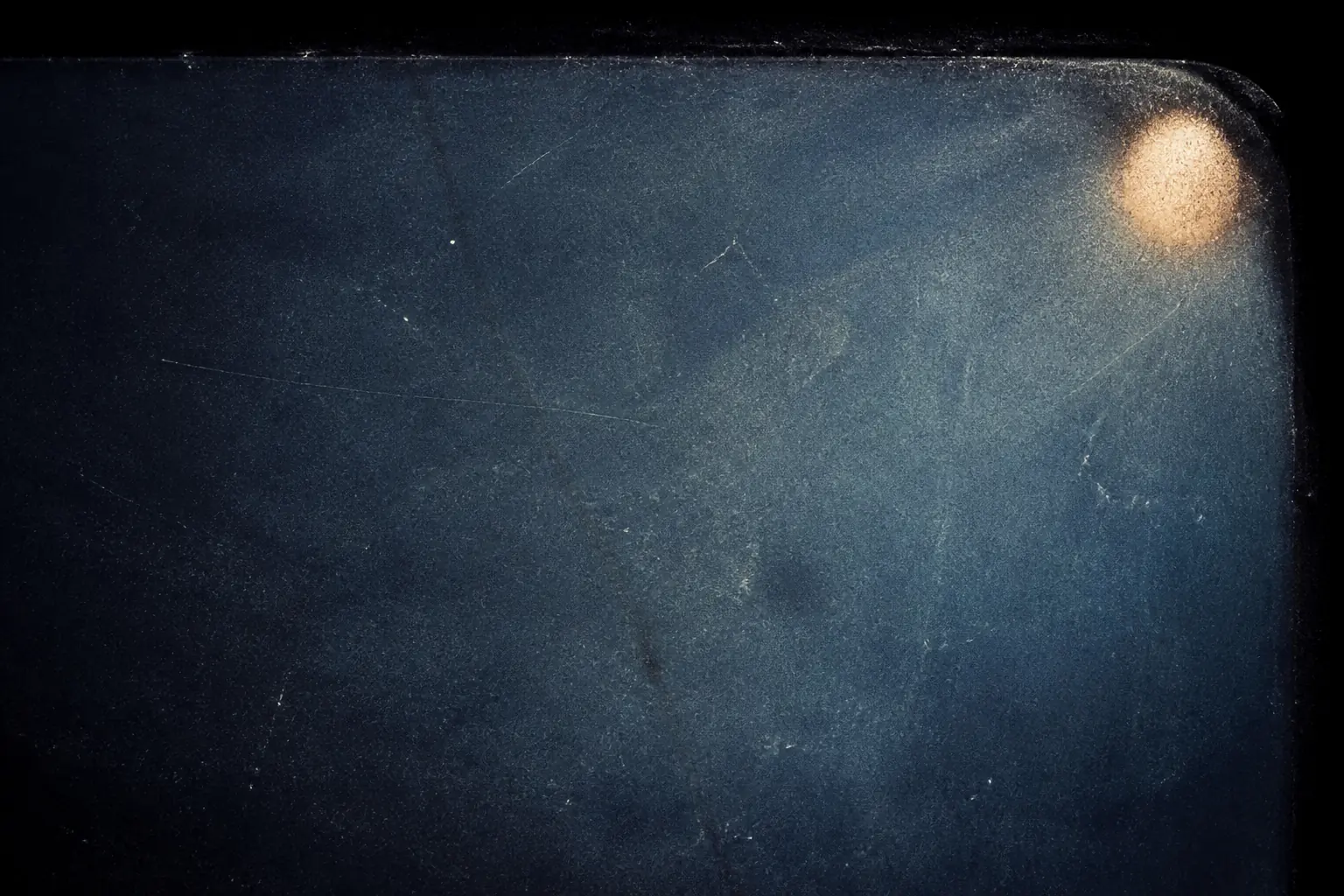
Small circular burns appear in the upper right of the frame at several points. In commercial projection, marks of that kind cued a projectionist to change over between reels. Here they were added deliberately, in places where no reel change occurs.
The narrator explains the practice in a sequence about his character’s work as a projectionist, which means the film teaches the audience to read its own decoration. The marks then appear as punctuation, usually before a shift in the narrator’s reliability.
The device pays off in the final shot, where the film openly acknowledges that it is a constructed object. The whole conceit is confirmed in the commentary and is one of Fincher’s cleverest formal jokes.
On the record: The added cue marks and their purpose are discussed by Fincher in the film’s audio commentary.
A disposable coffee cup is in nearly every scene
Fincher has said that the production placed a branded coffee cup somewhere in almost every scene in the film, as a running joke about the ubiquity of a particular chain in late-1990s American life.
It works as satire because it is invisible. The cups are set dressing, not gags, and the accumulation only registers if you go looking. Once you do, they are everywhere, including in scenes where nobody is drinking coffee.
The detail is often reported as a claim that a cup appears in literally every shot, which the film does not support. The confirmed version, that they were placed in nearly every scene, is both accurate and funnier.
On the record: Fincher has described the coffee-cup placement in the film’s commentary and in subsequent interviews; the stronger claim of every single shot is a later exaggeration.
The staging avoids putting three people in a conversation
Scenes involving the narrator, the woman he is entangled with, and the man he has invented are consistently staged so that no genuine three-way exchange occurs. One party is absent, on the telephone, in another room, or being spoken about rather than to.
The restriction is comparable to the rule in The Sixth Sense, and it does the same job: it allows a first viewing to read the scenes conventionally while a second viewing sees the geometry.
The film also plays the rule for comedy. Several arguments are conducted by shouting through walls or across parked cars, which reads as chaotic behavior and is in fact careful blocking.
On the record: The staging pattern is discussed in the film’s commentary and is verifiable across the finished film.
The home release opened with a falsified warning
The film’s first home release replaced the standard anti-piracy notice with a rewritten version delivering a message in the voice of the film’s antagonist. It appeared where an unskippable legal card normally sits, on the assumption that nobody reads them.
It is one of the most successful Easter eggs ever placed on a commercial release, precisely because it exploited a piece of packaging the audience had been trained to ignore.
The card was authorized by the studio and appears on multiple editions, which makes it a documented production choice rather than a rumor.
On the record: The altered warning card appears on Fox’s home releases of the film and has been widely documented since.
The last shot ends with a spliced frame
The film closes with a single inserted frame of pornographic material, echoing an earlier sequence in which the narrator describes the projectionist’s practice of splicing such frames into family films.
It is the film’s final joke and its structural signature: the conceit established an hour earlier is executed on the audience in the last second of the running time. Almost nobody catches it in a theater.
Because the earlier sequence explains the practice explicitly, the ending is a payoff rather than a prank. The film told you what it was going to do.
On the record: The inserted final frame is verifiable on home releases and is confirmed by Fincher in the commentary as a deliberate payoff to the projectionist sequence.
Claims that go beyond the record
Two claims circulate that are not supported. The first is that a cup appears in every individual shot rather than in nearly every scene. The second is that additional single-frame appearances exist beyond the four Fincher identified.
Frame-by-frame examinations circulated online have proposed a fifth and sixth appearance, generally involving motion blur or a background extra. None has been confirmed, and the film’s own commentary specifies four.
The distinction is not pedantry. The four confirmed frames are a designed device; the additional candidates are the product of an audience that has learned to expect them.
On the record: The commentary specifies four single-frame appearances; additional claimed instances have no production confirmation.
Connections to other films
Fincher’s Se7en and Zodiac share this film’s interest in withheld information, but the closest formal relative is The Game, made immediately before, which also constructs a narrative the audience must reassess. The three together outline a decade-long project about unreliable framing.
The single-frame technique has a longer history in cinema, including experimental work of the 1960s and a well-documented tradition of advertising claims about subliminal images. This film uses the technique honestly, as a plant that rewards attention rather than as an attempt to influence anyone.
Its home-release strategy also connects it to a specific moment in film distribution. The format made frame-accurate pausing available to ordinary viewers for the first time, and this film was among the first to be designed with that capability in mind.
Cultural references explained
The consumer satire that runs through the film, from the catalogue furniture to the coffee chain to the corporate slogan parodies, is specific to American white-collar life at the end of the 1990s. The film’s targets were then at the peak of their cultural visibility.
The support-group sequences reference a real and widely reported culture of therapeutic gathering that had become a subject of both sincere participation and satire by the mid-1990s. The film uses it as a setting rather than as an argument.
Palahniuk’s novel emerged from a tradition of transgressive American fiction, and the film retains its most cited lines while substantially changing the ending. Readers coming from the book will find the film’s final act reorganized, which is worth knowing before comparing the two.
Confirmed facts and interpretation
Fincher’s commentary is the load-bearing source for this guide, and it is unusually specific. He identifies the four frames, explains the cue marks, and describes the coffee-cup joke, which allows most claims to be checked directly against the film.
The interpretive material consists almost entirely of inflation. Real devices have been exaggerated into larger claims, which is a common fate for films with attentive audiences and a reputation for hidden detail.
On the record
- Four single-frame appearances of Tyler precede his formal introduction, at the photocopier, the doctor’s office, the support group, and the hotel corridor.
- Projection cue marks were added deliberately at points where no reel change occurs.
- A branded coffee cup was placed in nearly every scene as a running visual joke.
- Scenes are staged to avoid genuine three-way conversations between the principal characters.
- The first home release replaced the standard legal warning with a rewritten card in character.
- The film ends with a deliberately spliced single frame, paying off the projectionist sequence.
Interpretation, not fact
- That a coffee cup appears in literally every shot in the film.
- That additional single-frame appearances exist beyond the four the director identified.
- That the film’s furniture catalogue sequence references a specific real retailer’s layout rather than the category in general.
Sources consulted
The material below informed this guide. Where a claim rests on a single account, the guide says so in the relevant entry.
- Fight Club audio commentary with David Fincher and castTwentieth Century Fox home releases. Primary source for the four planted frames, the cue marks, and the coffee-cup joke.
- Fight Club, by Chuck PalahniukW. W. Norton. Consulted to establish which devices originate in the novel and which were created for the film.
- Interviews with David Fincher on the film’s home release designSight and Sound, The Guardian. Context for the altered warning card and the film’s post-theatrical reception.
- Contemporary reviews and box-office reporting, 1999Variety, The New York Times. Documents the film’s theatrical performance and critical division on release.
- Technical documentation on projection cue marksSociety of Motion Picture and Television Engineers. Background on the changeover marks the film reproduces artificially.
Spotted an error or have a documented source we should add? Write to [email protected] and read our corrections policy.